
The 2026 Nobel Prize in Physics honours Francis Halzen for his pivotal role in the development of the IceCube Observatory and the discovery of high-energy astrophysical neutrinos. The award celebrates the rise of neutrino astronomy, a field to which APC actively contributes through the ANTARES and KM3NeT experiments.
A LA UNE
APC once again has the honor of counting among its members a winner of the famous L'Oréal-UNESCO prize for Women and Science France! Quickly find out who it is.
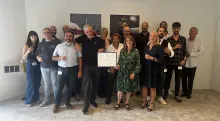
This prize recognizes an individual or a small team from the French scientific community who has particularly distinguished themselves through scientific work in the fields of aeronautics or space.
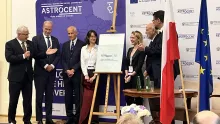
On 23 and 24 September 2026, the APC teams played an active role in the second meeting of the Astrocent Plus consortium and the first progress review of the Teaming for Excellence project, held in Warsaw. A look back at significant days for astroparticle physics in Poland.
2026-10-15 10:00
Eiichiro Komatsu
Max-Planck-Institut für Astrophysik
Germany
454A