Universe is not transparent for high energy photons. If energy of
photons in center of mass system is above threshould energy order of
1 MeV, they can produce electron-positron pair on background photon.
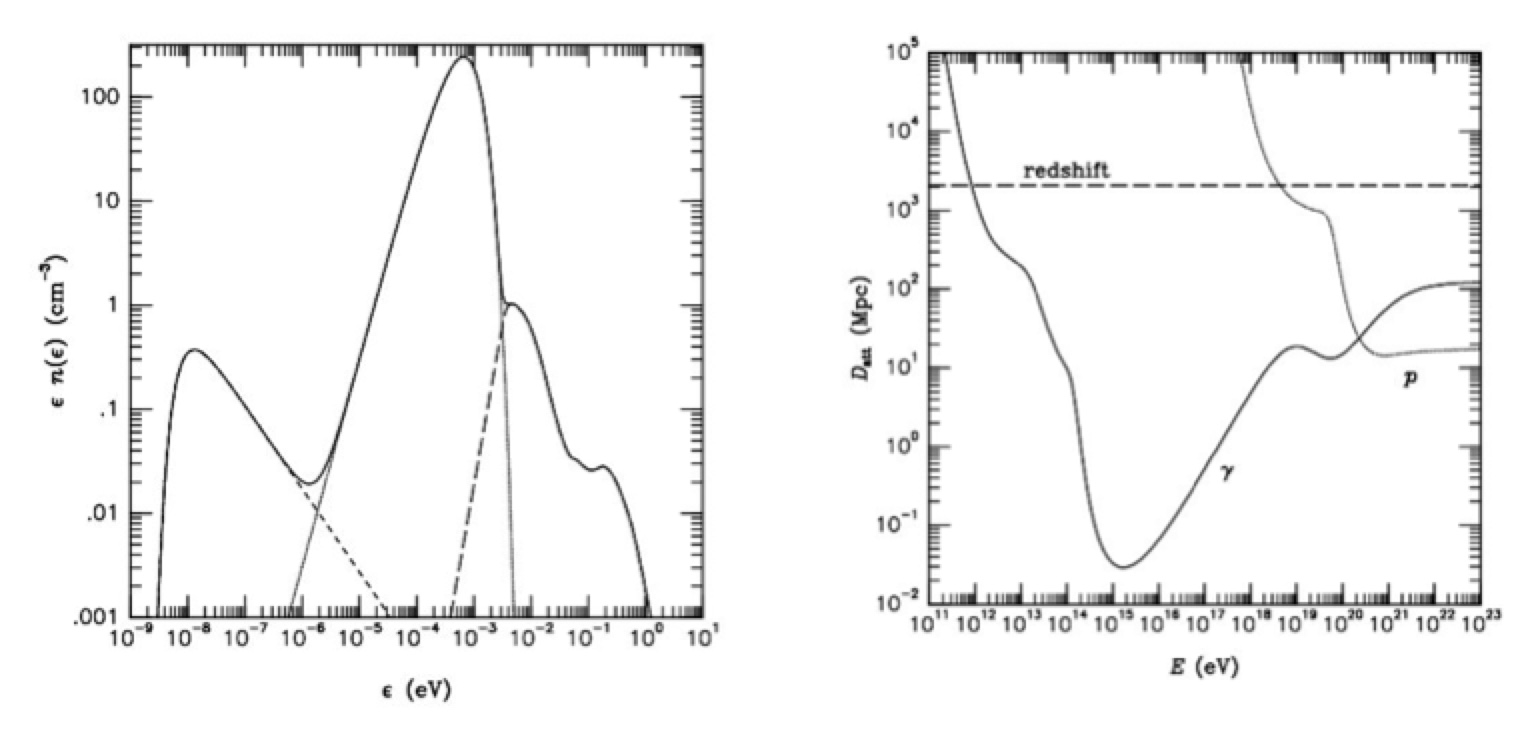
Fig.1: Left: Spectra of background photons in the universe,
radio, CMB, infrared and optical backgrounds. Right: gamma-ray
attenuation length as function of energy.
Universe is not empty, it filled with Cosmic Microwave Background
Radioation, thermal sea of photons with typical energy of 0.001 eV and
density about 400 photons per cm^3. In the Fig. 1 on left panel this
background correspond to highest peak. At low energies one can see
radio background, at higher energies infrared and optical
backgrounds. Optical background formed by all star emission in the
Universe. Infrared background related to optical background. Since
stars are formed in the molecular clouds, their optical emission is
absorbed and reimitted by dust in the infrared energy range. This
reemmited radiation forms infrared background of Universe. Radio
background forms by emittion of all radio sources. It's shape and
amplitude are model dependent. Direct masurement of this background
is difficult due to high foreground emittion of our Galaxy.
In the right panel of Fig. 1 photon attenuation length as function of
energy is shown. Photons of PeV energies can reach us only from
distanses less then one to Galactic center (8 kpc), however lower and
higher energy photons can travel longer. TeV photons, which can
produce pairs only with relatively small optical background at eV energies
can reach us from Gpc distance, while for E<30 GeV Universe is
transparent for photons.
Fig. 2: Spectrum of blazar 1ES 0229+200.
Example of measured spectrum of blasar 1ES 0229+200 is shown in
Fig. 2. This source is located at z=0.18 or distance about 1
Gpc. Example of intrinsic spectrum of this source is shown with thin
solid line. One can see, that at energies above 300 GeV this spectrum
modified by interaction on diffuse gamma-ray background. Exaple of
spectrum expected on Earth is shown with thick solid line.
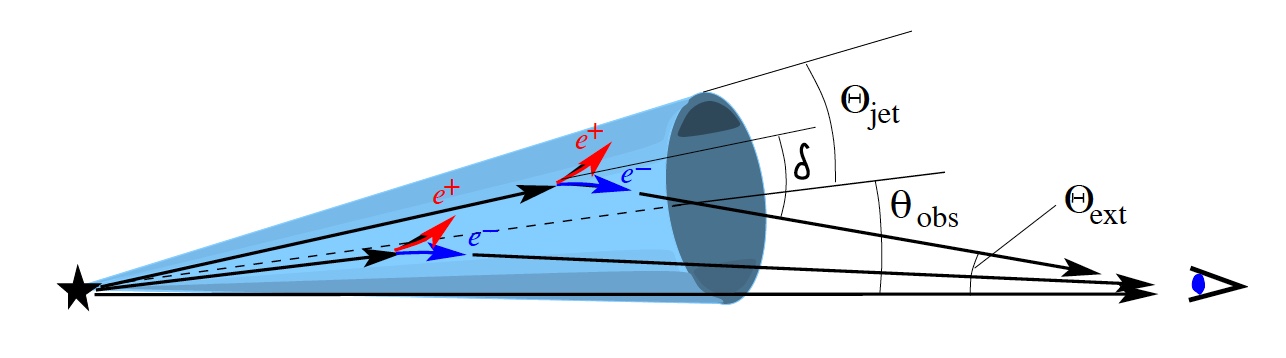
Fig. 3: Electromagnetic cascade from high energy gamma-rays.
In figure 3 we issustrate electromagnetic cascade developed in the
intergalactic space. Primary photons produce electron-positron pairs
in the intergalactic space. If those pairs produced in filaments or
clusters of Galaxies, secondary electron and positron directions are
randomised by relatively large magnetic fields and secondary gamma-ray
radiation emitted isotropically. However, if electrons and positrons
are produced in the voids of Large Scale Structure, significant
fraction of secondary photons can be reimitted in the direction of observer.
Resulting secondary emittion can produce following observational
signatures:
Contribution to observed spectrum of point source
Delayed flux after bright flairs
Extended emittion around point source
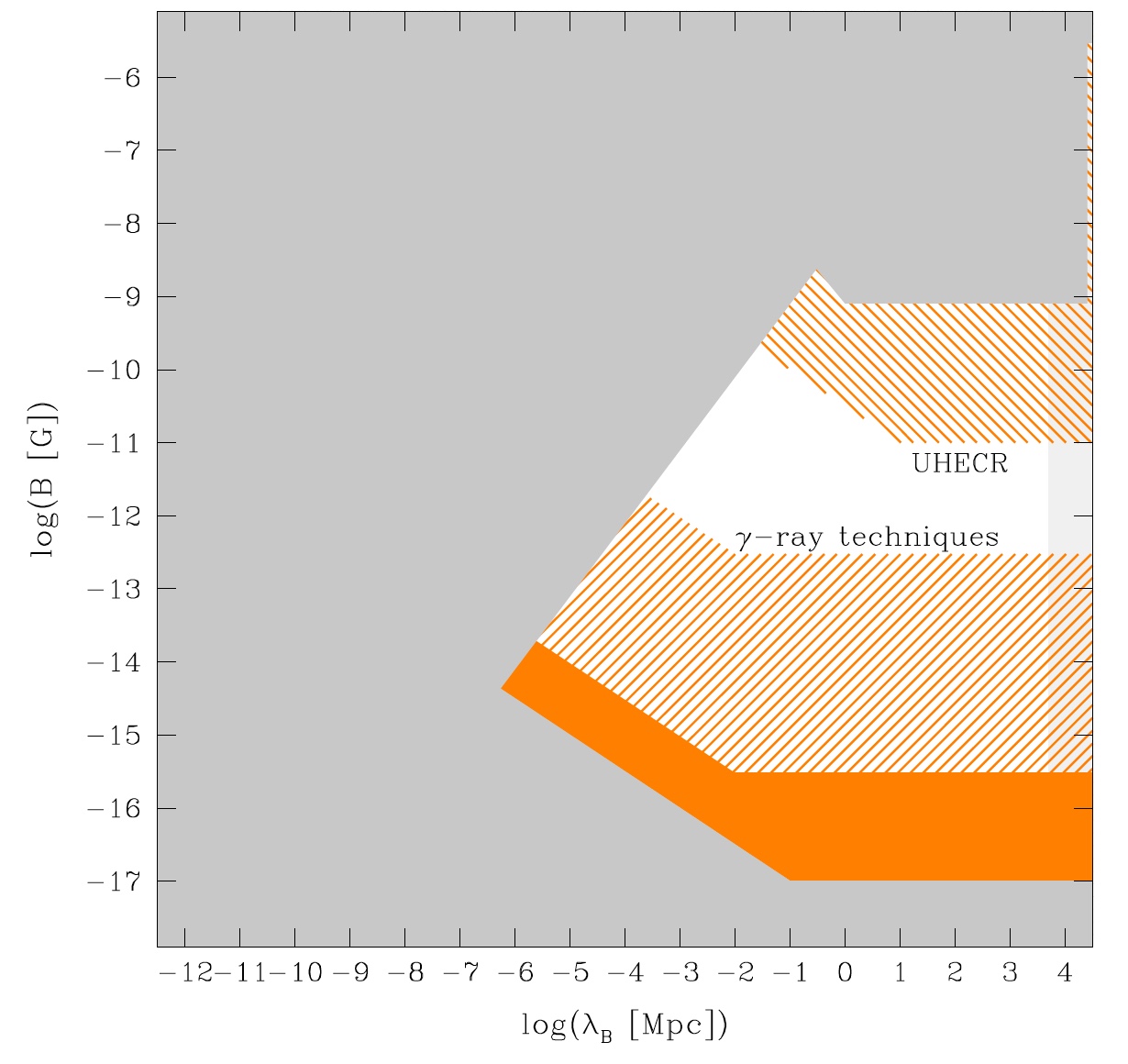
Fig.4: White region is allowed parameter space of magnetic field strength versus correlation length.
Detection of primordial magnetic field with gamma-ray
telescopes and UHECR will allow to cover most of parameter space.
All those signatures allow to detect or constrain inter-galactic
magnetic field in the voids of Large Scale Structure. In Fig. 4 we
plot allowed region of inter-galactic magnetic field strength and
correlation length. Smaller magnetic fields can be studied by
gamma-rays and higher magnetic fields by Ultra-High Energy Cosmic
Rays (UHECR).



 Contribution to observed spectrum of point source